
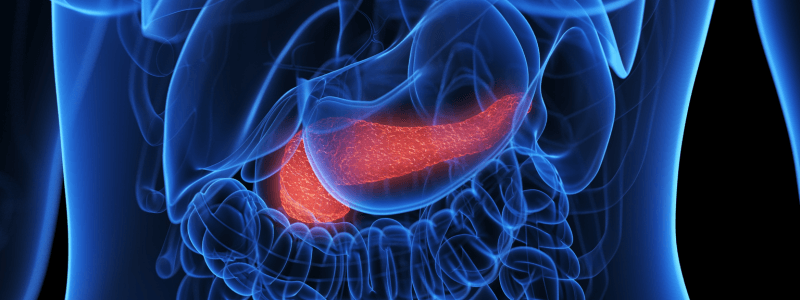
The two major causes are gallstones and alcohol.

Epidemiology
Incidence: ~56 cases per 100,000 people per year (UK).
Admissions: >30,000 annually in the UK.
Risk groups:
- Males (alcohol-related)
- Females (gallstone-related)
- Ages 30–60 years.
Common Causes
Gallstones (~40–60%)
Alcohol (~20–30%)
Mnemonic: I GET SMASHED
- I: Idiopathic
- G: Gallstones
- E: Ethanol (alcohol)
- T: Trauma
- S: Steroids
- M: Mumps, other viruses
- A: Autoimmune pancreatitis (IgG4 disease)
- S: Scorpion sting (rare)
- H: Hyperlipidaemia (>11 mmol/L), Hypercalcaemia
- E: ERCP
- D: Drugs (azathioprine, thiazides, valproate)
Pathophysiology
Inappropriate activation of trypsinogen within the pancreas ➔ autodigestion.
Inflammatory cascade ➔ cytokine storm (TNF-α, IL-6).
Vascular damage ➔ oedema, necrosis, haemorrhage.
Clinical Features
Severe epigastric pain, often radiating to the back and relieved by leaning forward.
Nausea and vomiting.
Fever, anorexia, and epigastric tenderness.
Hypotension and tachycardia may suggest significant fluid loss (third-spacing).
Specific signs like Grey-Turner’s sign (flank bruising) and Cullen’s sign (periumbilical bruising) indicate haemorrhagic pancreatitis and carry a poor prognosis.
Investigations
Diagnosis is mainly clinical but supported by tests:
- Serum lipase (preferred over amylase) is typically elevated to >3× normal.
- Blood tests include FBC, U&Es, LFTs, calcium, triglycerides, and CRP.
- Ultrasound scan looks for gallstones.
- CT abdomen is reserved for unclear diagnoses, severe cases, or suspected complications.
- MRCP may be used if a bile duct obstruction is suspected.
Severity Assessment
Ranson’s Criteria and other scoring systems (e.g., Glasgow-Imrie) predict severity.
At admission, factors like age >55, high WCC, raised glucose, LDH, and AST suggest a worse prognosis.
Progress over 48 hours is critical for outcome prediction.
Severe pancreatitis requires HDU/ICU level care.
Management
Immediate supportive care is essential: oxygen, aggressive IV fluid resuscitation, and strong opioid analgesia.
Patients are kept nil by mouth initially if vomiting; otherwise, enteral feeding is preferred over parenteral nutrition.
Antibiotics are not routinely indicated unless infected necrosis is suspected.
ERCP is urgent if there is biliary obstruction or cholangitis.
Patients with gallstone pancreatitis should have an early cholecystectomy during the same admission if possible.
Complications
Early complications include sepsis, shock, ARDS, acute kidney injury, and hypocalcaemia.
Late complications include pancreatic pseudocysts, pancreatic abscess, chronic pancreatitis, and diabetes mellitus.
Prognosis
Mild pancreatitis has a mortality rate of less than 1%.
Severe pancreatitis carries a mortality rate between 15% and 30%.
Recurrence is common if underlying causes like gallstones or alcohol use are not addressed.
Key Exam Tips
Always check lipase, not just amylase — it’s more sensitive and specific.
Suspect gallstones in jaundiced pancreatitis.
Start aggressive IV fluids early to reduce the risk of necrosis and organ failure.
Antibiotics are not given routinely — only if infection is proven.
CT scanning is not needed for all patients — reserve it for worsening or unclear cases.
Header image used on licence from Shutterstock
Thank you to the joint editorial team of PLAB Prep for this article.


Very nice and comprehensive